Insights
Google DeepMind CEO: “AI-Designed Drugs Could Be A
Google DeepMind CEO: “AI-Designed Drugs Could Be Administered to Patients Within the Next Few Years”
Bloomberg TV Interview Highlights AlphaFold 3, Which Predicts DNA and RNA Structures and Molecular Interactions
“Beyond Protein Structure Prediction, AI Can Now Model the Shapes and Interactions of Biological Molecules”

Google DeepMind CEO Demis Hassabis said on the 8th that he expects the first AI-designed drugs could be administered to patients within the next few years.
Speaking in an interview with Bloomberg TV, Hassabis made the remarks while introducing AlphaFold 3, the latest version of Google DeepMind’s AI system for predicting biological structures.
Google DeepMind first unveiled AlphaFold in 2018, followed by AlphaFold 2 in 2020. The company has now introduced AlphaFold 3, with the related research published in the international scientific journal Nature.
Hassabis said, “We’re very excited to publish this new paper in Nature, which contains groundbreaking research findings. This is an important milestone for Google DeepMind.”
While earlier AlphaFold models focused primarily on predicting protein structures, AlphaFold 3 can predict the structures and interactions of a much broader range of biological molecules.
Cells depend on complex interactions among billions of molecules, including proteins and genetic material such as DNA. AlphaFold 3 is designed to predict the structures of nearly all major classes of biomolecules that form the foundation of living systems.
According to Google DeepMind, the model improves the accuracy of predictions involving interactions between proteins and other molecules by more than 50% compared with previous methods, and in certain interaction categories, accuracy has roughly doubled.
Hassabis noted that “AlphaFold 2 was a breakthrough technology that transformed structural biology. It has been cited more than 20,000 times and has become an important research tool for scientists around the world.”
He added, “Google DeepMind has always sought to use AI to expand the frontiers of biological research, and AlphaFold 3 represents the latest stage of that effort.”
AlphaFold 3 takes a list of molecules as input and generates a three-dimensional structure, showing how those molecules are likely to interact and bind with one another.
In addition to large biomolecules such as proteins, DNA, and RNA, the model can also represent smaller molecules known as ligands, as well as chemical modifications that can disrupt normal cellular function and contribute to disease.
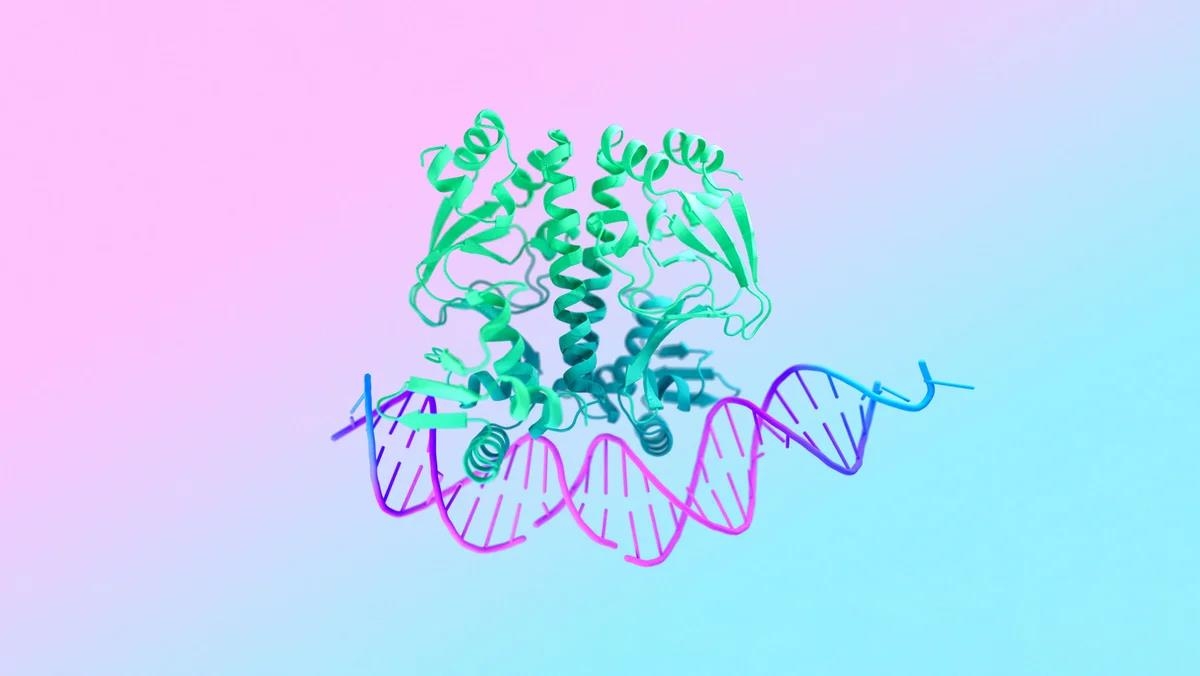
The paper explains that AlphaFold 3 can predict the structures of nearly all major types of biomolecules with high accuracy, providing a broader and more precise view of the molecular components that make up living organisms and helping researchers understand the biological world in greater detail.
Google DeepMind expects AlphaFold 3 to contribute significantly to drug discovery and disease research.
In fact, Isomorphic Labs, the drug discovery subsidiary of Google parent company Alphabet, is already using AlphaFold 3 in its pharmaceutical research and development efforts.
Alongside AlphaFold 3, Google DeepMind also announced the AlphaFold Server, a free platform designed to support nonprofit research.
The platform enables researchers to predict how proteins interact with other molecules throughout cells and is available free of charge to scientists worldwide for non-commercial research.
Using AlphaFold 3 through the server, researchers can model structures involving proteins, DNA, RNA, ligands, ions, and chemical modifications with just a few clicks.
As competition in artificial intelligence intensifies, increasingly sophisticated AI models for drug discovery are also emerging.
NVIDIA, a leading developer of AI chips, introduced BioNeMo in January, a generative AI-based drug discovery platform capable of applications such as protein structure prediction. Microsoft also unveiled EvoDiff in September last year, an AI model designed to generate novel proteins.
[Yonhap News Agency]