Insights
Advanced Biopharmaceuticals: Key Clinical Consider
Advanced Biopharmaceuticals: Key Clinical Considerations for a Smooth Regulatory Approval Process
2024 Advanced Biopharmaceutical Regulatory Approval Training Workshop Held
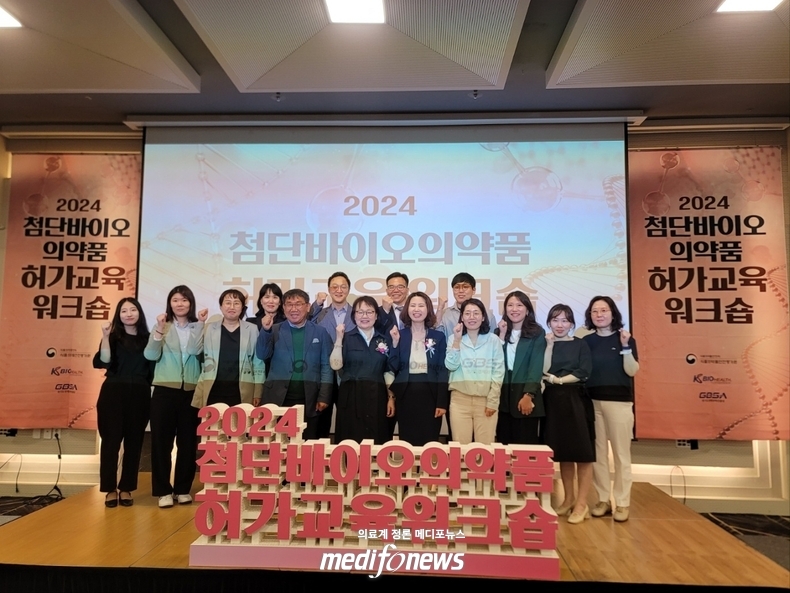
Amid growing interest in advanced biopharmaceuticals, a workshop focused on regulatory approval drew significant attention from industry and research stakeholders.
The National Institute of Food and Drug Safety Evaluation (NIFDS) under Korea’s Ministry of Food and Drug Safety (MFDS), together with the Osong Medical Innovation Foundation and the Gyeonggi Business & Science Accelerator (GBSA), held the “2024 Advanced Biopharmaceutical Regulatory Approval Training Workshop” on the 13th.

The workshop opened with a presentation by Park So-ra, President of the Korea Regenerative Medicine Promotion Foundation, on “Domestic Outlook and Perspectives on the Advanced Biopharmaceutical Industry.”
Park noted that among pharmaceuticals, biologics, and advanced biopharmaceuticals, advanced biopharmaceuticals are showing the highest growth rate at 22.7%. She emphasized that the cell and gene therapy market has grown particularly rapidly, while the gene delivery vector market is also projected to expand at a compound annual growth rate of 18.7%, making it an increasingly important industry issue.
She stressed that revitalizing the industrial ecosystem requires greater circulation and commercialization throughout the value chain, supported by innovation in manufacturing technologies, manufacturing infrastructure, and business models.
“Changes in manufacturing methods can reduce costs to one-tenth or even one-hundredth of current levels,” Park said. “In other countries, substantial support is being provided through partnerships between governments, as well as between the public and private sectors.”
She also highlighted the importance of proactive workforce development, adding that collaboration with companies is necessary to train personnel in the manufacturing technologies that the industry actually needs.
Park further explained that creating new jobs and attracting overseas patients could become promising business models, while another opportunity lies in making better use of human-derived biological materials held by hospitals.
Concluding her presentation, she said that revisions to Korea’s Advanced Regenerative Medicine and Advanced Biopharmaceuticals Act could help expand treatment opportunities for patients, attract international patients, and strengthen the foundation of the regenerative medicine ecosystem.

The next presentation was delivered by Lee Jae-rin of the Cell and Gene Therapy Products Division at the National Institute of Food and Drug Safety Evaluation (NIFDS), who discussed “Key Considerations for Nonclinical Studies of Advanced Biopharmaceuticals.”
Lee outlined the major areas reviewed during nonclinical evaluation. For pharmacological effects, the required data were categorized into efficacy studies, safety pharmacology studies, and absorption, distribution, metabolism, and excretion (ADME) studies. For toxicity evaluation, required data were categorized into single- and repeated-dose toxicity studies, genotoxicity studies, carcinogenicity studies, reproductive and developmental toxicity studies, and other toxicity studies, including immunogenicity assessments.
Regarding efficacy studies, Lee emphasized the need for detailed supporting data. “Results should be analyzed quantitatively, and the data should demonstrate whether the findings are statistically significant,” Lee said. “What is needed is not simply the best-performing result, but data that demonstrate consistent outcomes.”
Lee added that applicants should also submit evidence supporting the mechanism of action, provide a scientific rationale for dose selection, and demonstrate the appropriateness of the animal model used in the study.
For ADME studies, Lee noted that the suitability of the animal model must likewise be justified. When the investigational product shows clearance or disappearance over time, applicants should provide data demonstrating the trend of reduction and submit validation data for the analytical methods used.
In single- and repeated-dose toxicity studies, Lee explained that studies should be designed using appropriate criteria so that the findings can support the proposed clinical dose. If abnormal findings are observed, a detailed discussion should also be provided to adequately address any potential safety concerns.
Regarding carcinogenicity studies, Lee said, “If fewer cells are administered to the test group than to the positive control group when evaluating tumor formation, the rationale for the study design needs to be clearly justified. The appropriateness of the control group may also need to be demonstrated, particularly in studies involving embryonic stem cells. If tumors develop, it may be necessary to determine whether they are animal-derived or human-derived.”
Lee also explained that for other toxicity assessments, analysis of mixed lymphocyte reaction (MLR) test results may be required depending on whether HLA information is submitted. Appropriate specimens should be used in sufficient numbers to establish relevant criteria, and the scientific basis for those criteria should be clearly provided.

The third presentation was delivered by Prof. Kyun-Seop Bae of the Department of Clinical Pharmacology at Asan Medical Center, who outlined eight key statistical considerations for clinical trial planning.
First, Prof. Bae emphasized the importance of determining whether a study is exploratory or confirmatory. Second, the endpoints and outcome variables should be clearly defined. Third, for confirmatory studies, the alternative hypothesis must be specified, while exploratory studies should clearly define the parameters to be estimated.
Fourth, an appropriate study design should be selected, taking into account factors such as control groups, blinding, randomization, dose-response relationships, parallel or crossover designs, titration designs, and adaptive designs.
Fifth, the analysis population or analysis dataset must be clearly defined. Sixth, the statistical analysis methods should be specified in advance.
Seventh, an appropriate sample size should be determined. Finally, the study should establish clear plans for quality assurance, data management, and statistical analysis before the trial begins.
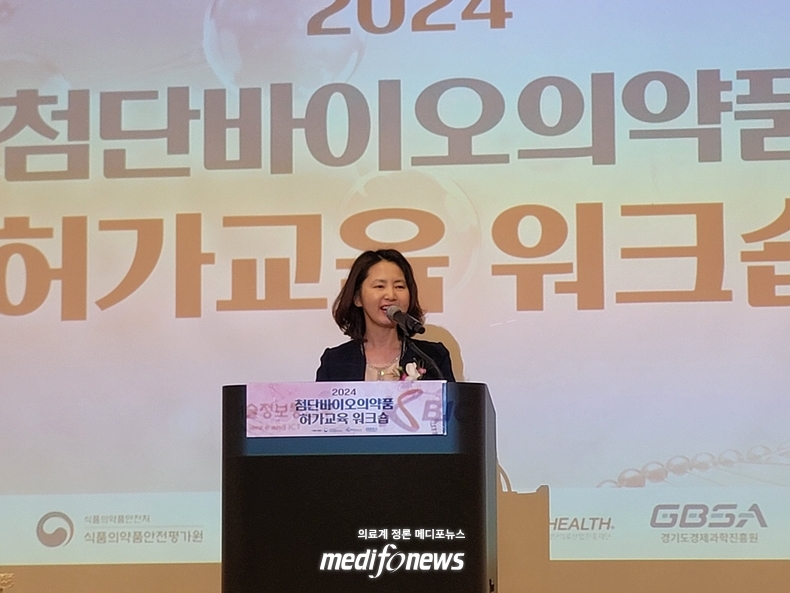
Opening the workshop, Choi Young-joo, Director General of the Biopharmaceuticals and Herbal Medicine Evaluation Department at the National Institute of Food and Drug Safety Evaluation (NIFDS), emphasized the importance of continuous exploration, communication, and collaboration in the rapidly evolving field of advanced biopharmaceuticals.
“In a field where new concepts and technologies are constantly emerging, it is important to find the most reasonable regulatory balance through ongoing research, communication, and cooperation,” Choi said. “To do so, each party must stand firmly on its own expertise while remaining open to the perspectives of others. Only then can novel substances first introduced through academic research be incorporated quickly into a stable regulatory framework as medicines.”
Choi added, “The Ministry of Food and Drug Safety has recently established and is operating Cell-Up, a regulatory support consultative body designed to strengthen communication and collaboration among industry, academia, and research institutions. We will continue working to promote meaningful and constructive dialogue in the advanced biopharmaceutical field.”
[Reporter Noh Young-hee]
Email: nyh2152@medifonews.com