Press
Konkuk University Team Develops DDR1-Targeting...
Konkuk University Team Develops DDR1-Targeting Compound to Suppress Stem Cell Aging
AC-4067 Identified as a Novel DDR1-Targeting Compound, Enhancing Cell Proliferation and Wound Healing
Study Published in an International Journal Highlights Potential for Anti-Aging Therapies
A research team led by Prof. Ssang-Goo Cho of Konkuk University has developed a novel DDR1-targeting compound that may help delay stem cell aging while enhancing tissue regeneration.
The study was conducted through an international collaboration with Prof. Kyung Lee’s research team at Dongguk University and researchers from Weill Cornell Medicine in the United States.
The findings were published in Biomedicine & Pharmacotherapy, an international journal ranked within the top 5.3% in the fields of pharmacology and pharmacy.
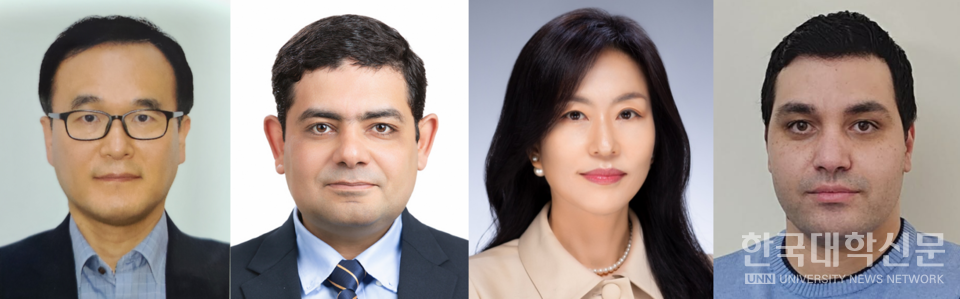
From left: Prof. Ssang-Goo Cho, Prof. Ahmed Abdel Dayem, Prof. Kyung Lee of Dongguk University College of Pharmacy, and Dr. Hossam Nada of Weill Cornell Medicine.
DDR1 is a protein involved in cell signaling, tissue regeneration, and the regulation of cellular senescence, making it an important target in regenerative medicine and anti-aging research. However, only a limited number of small-molecule compounds are available that can selectively regulate DDR1, highlighting the need for new therapeutic candidates.
Using computer-aided molecular design, the research team identified AC-4067, a novel compound that selectively inhibits DDR1. The researchers analyzed its binding characteristics through structure-based virtual screening and molecular dynamics simulations, and optimized its structure–activity relationship to identify the final candidate compound.
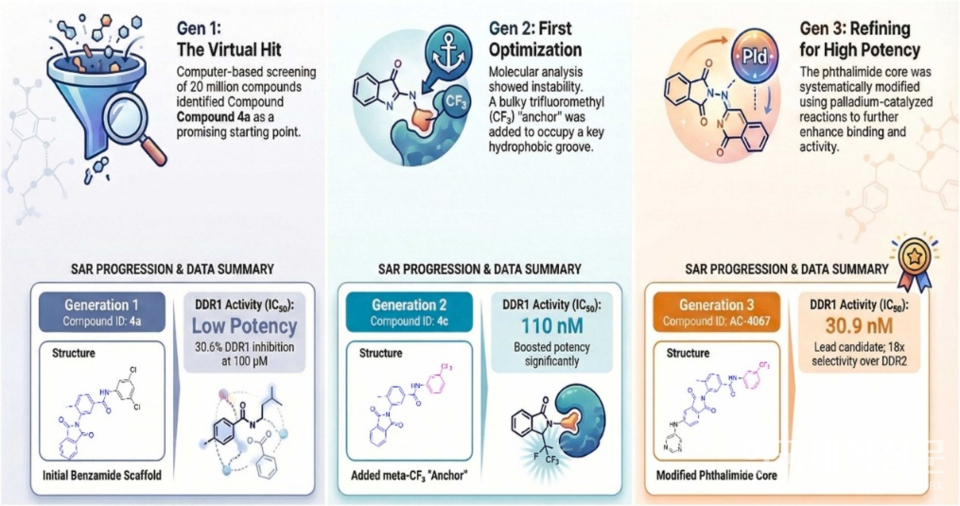
Development of the lead compound AC-4067 through structure–activity relationship (SAR) optimization of DDR1 inhibitors.
The compound demonstrated potent inhibitory activity against DDR1, along with clear selectivity over related proteins. When applied to umbilical cord-derived mesenchymal stem cells, AC-4067 enhanced cell proliferation and migration while significantly improving wound-healing capacity.
The researchers also observed reductions in both cellular senescence markers and DNA damage markers, suggesting that DDR1 inhibition may help suppress stem cell aging and preserve cellular function. These findings indicate that targeting DDR1 could be an effective strategy for maintaining and enhancing the regenerative potential of stem cells.
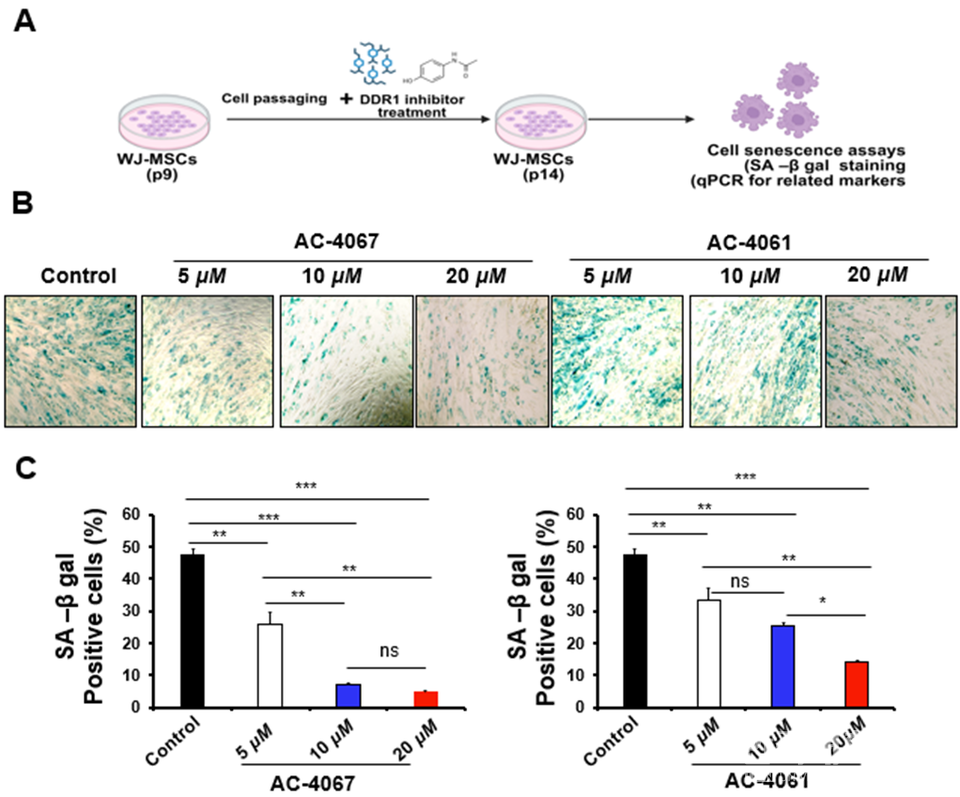
Treatment of umbilical cord-derived mesenchymal stem cells with AC-4067 resulted in a reduction in cellular senescence markers.
The research team stated, “Through a DDR1-targeting inhibitor, we confirmed the potential to suppress stem cell aging and enhance tissue regeneration. This study could provide an important foundation for developing anti-aging therapeutic strategies that combine AI-based drug design with regenerative medicine.”
Prof. Ssang-Goo Cho of Konkuk University and Prof. Kyung Lee of Dongguk University served as co-corresponding authors, while Prof. Ahmed Morsy of Konkuk University and Dr. Hossam Nada of Weill Cornell Medicine contributed as co-first authors.